Wednesday, September 15, 2010

Trinidad and Tobago consultation on point-to-point radiocommunications systems

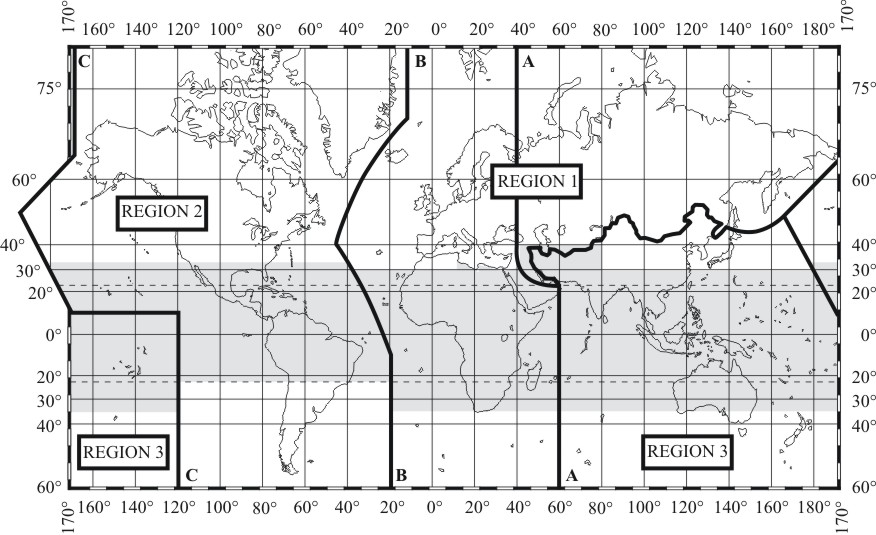
The Telecommunications Authority of Trinidad and Tobago (TATT) has initiated a public consultation on point-to-point radiocommunications systems.  According to the consultation document, the TATT is seeking firstly to identify the various frequency bands of operation deployed globally and, in particular, by International Telecommunications Region 2 countries, taking into consideration the frequency bands and assignment plan presently used by point-to-point systems locally. Secondly, the TATT seeks to analyze and summarize the current spectrum availability for the associated frequency bands in Trinidad and Tobago. Finally, based on the above information, the TATT proposes frequency bands and associated assignment plans for the accommodation of point-to-point radiocommunications systems and indicates the appropriate licensing process for the assignment of spectrum to users.

The specific bands discussed in this consultation documents are 1.4 GHz, 2.4 GHz, 5 GHz, 5.7 GHz, 5.8 GHz, Lower 6 GHz, Upper 6 GHz, 7 GHz, 8 GHz, 10 GHz, 11 GHz, 13 GHz and 15 GHz. As a general rule, the TATT appears to have rejected the idea of a competitive licensing process for this spectrum and is proposing instead to adopt a "first-come, first served" licensing process (with the exception of the 2.4, 5.7 and 5.8 GHz bands, where the TATT is proposing a class licensing regime and the Upper 6 GHz band, which the TATT is proposing to set aside for Studio-to-Transmitter Links). This approach is consistent with international best practice.

While backhaul has traditionally been carried on copper wire or fiber, telecom operators worldwide are increasingly turning to wireless technology for capacity to meet the increased demand created by growing numbers of bandwidth-hungry mobile devices and applications. Wireless backhaul is particularly desirable in the Caribbean, where laying wire or fiber is often cost-prohibitive. Telecommunications regulators around the world are attempting to come to grips with this important component of modern telecommunications infrastructure. The U.S. Federal Communications Commission, for instance, is currently in the midst of a proceeding on this topic.  The TATT is therefore to be congratulated for tackling such an important issue.

Comments are due October 13, 2010

Friday, September 3, 2010

Jamaica Supreme Court Dismisses LIME Application for Injunctive Relief

Jamaica Supreme Court Justice Ingrid Mangatal
Yesterday, Justice Mangatal of the Jamaica Supreme Court dismissed an application by LIME for injunctive relied against Digicel as part of an ongoing court proceeding over fixed-to-mobile termination rates.  Justice Mangatal's decision provides a good overview of the legal test for injunctive relief in Jamaica (and other common law jurisdictions). She concluded that, while there appears to be serious issues to be tried in this proceeding, LIME did not provide sufficient evidence to demonstrate that the balance of convenience justifies injunctive relief.

In the main proceeding, LIME claims that Digicel's conduct in setting higher rates for the termination of fixed line calls from other networks to call Digicel's mobile network, while setting lower rates for calls from Digicel's fixed network to Digicel's mobile network, is an abuse of dominant position under the Fair Competition Act.  LIME also alleges that, under section 30 of the Telecommunications Act, Digicel did not comply with the obligation to provide interconnection on a non-discriminatory basis.  Accordingly, LIME argues that it has a private cause of action under section 48 of the Fair Competition Act and section 67 of the Telecommunications Act.

Interestingly, as part of its defence in the main proceeding, Digicel denied the existence of  "market to terminate calls on Digicel's mobile network".  This position is consistent with Digicel's arguments before the Telecommunications Appeals Tribunal (as previously discussed on this blog).  It is clearly at odds, however, with the conclusions of the Telecommunications Appeals Tribunal, as well as the position taken by the International Telecommunications Union and telecommunications regulators around the world, most of whom have concluded that mobile termination is a distinct market that requires regulation.  In her decision, Justice Mangatal seemed reluctant to delve into such a detailed and complex economic analysis.  It will be interesting to see if the trial judge will rule on this important issue.

Wednesday, August 25, 2010

Mobile Phones and Driving Safety

According to the Guardian, the Trinidad and Tobago Cabinet has endorsed amendments to the motor vehicle legislation to ban the use of mobile devices while driving.  These amendments will soon be tabled in the Trinidad and Tobago Parliament.  In a post-Cabinet news conference on July 29, Works and Transport Minister Jack Warner noted that these amendments are intended to increase road safety in  Trinidad and Tobago.  Both Digicel and TSTT expressed their support for these amendments.
 
These amendments should be a no-brainer for all Caribbean nations.  Several studies have demonstrated clearly  that using a mobile device while driving a motor vehicle entails a similar risk as driving while intoxicated.  A significant number of nations have already adopted and implemented legislation to prohibit this practice.  One can only hope, therefore, that the other Caribbean nations will follow Trinidad and Tobago's lead in the near future.

Thursday, August 19, 2010

Barbados FTC Denies Digicel Motion to Review Consolidated RIO Decision

The Barbados Fair Trading Commission has denied a motion by Digicel for review of a February 2010 decision on Cable & Wireless' Consolidated Reference Interconnection Offer (RIO).  In its submissions, Digicel alleged that the FTC's February 2010 decision was reached in breach of the principles of natural justice and, in particular, that the FTC failed to adequately consult Digicel on certain amendments to the Consolidated RIO requested by Cable & Wireless. 

As part of its motion for review, Digicel submitted that the FTC should communicate to Digicel any changes made, no matter how minor, to the Consolidated RIO.  In its decision, the FTC concluded that this is not required by the Barbados Telecommunications Act.  The FTC also noted that, as part of the proceeding leading up to its February 2010 decision, Digicel had been given ample opportunity to make submissions on the amendments to the Consolidated RIO and therefore that there was no breach of the principles of natural justice.

This decision is a good illustration of the fact that telecom regulators, when adjudicating interconnection disputes, must ensure that all parties are given an opportunity to be heard.  This is particularly true in the Caribbean context, where the telecom industry is becoming increasingly litigious (especially in interconnection matters).

Wednesday, July 14, 2010

Bermuda Telecom Bill Delayed

In early July, the Ministry of Energy, Telecommunications and E-Commerce (METEC) in Bermuda announced that the tabling of the new telecommunications legislation would be delayed.  METEC Minister Michael Scott had previously told the industry that he would table the legislation prior to the summer recess.  According to a July 2 report in The Royal Gazette, "The Minister will update industry on its new time table as early as possible". 


As previously mentioned on this blog, the telecommunications legislation in Bermuda is in serious need of modernization. The fact that Bermuda does not have an independent regulatory body responsible for telecom and broadcasting regulation is clearly at odds with international best practices.  The International Telecommunications Union, for instance, in its most recent report on Trends in Telecommunication Reform (2009), describes the need for independent regulatory agencies as follows (see page 7 of Executive Summary):

The creation of separate ICT regulators has been one of the main building blocks of regulatory
reform worldwide since the 1990s. Regulators have played a leading role in creating an enabling
environment fostering innovation and investment. They have gradually opened fixed line services to
competition totaling 124 competitive markets for basic fixed-line services as of 2009, almost
inevitably privatizing the national fixed-line incumbent along the way. The overall objective of
regulators has been to ensure that public policy objectives for the sector continued to be met and
even exceeded.
Despite the need for legislative change in Bermuda, METEC's decision to delay the tabling of this legislation appears to be reasonable, given the feedback received from industry stakeholders.  The cost of the new regulatory agency was estimated to be approximately US $9 million per year.  This amount was heavily criticized by industry stakeholder, both in their regulatory submissions and media reports.  Indeed, this amount seems very high when compared to similar jurisdictions such as the Cayman Islands, where the regulator's annual budget is US $1.8 million (see page 269 of this budget document).  In the Bahamas, where the population is 330,000, or five times the Bermuda population, the annual budget of the telecom regulator is approximately $5 million (see page 21 of this draft annual plan).  Hopefully, the Government of Bermuda will rectify these issues in the near future to ensure that Bermuda's telecom regulatory framework is consistent with international best practices.

Monday, June 7, 2010

Bahamas Consultation on Content Regulation

Over the past few months, the Bahamas Utilities Regulation and Competition Authority (URCA) has been conducting a consultation on content regulation. Under the newly-promulgated Communications Act, 2009, URCA is mandated to issue new Codes of Practice for audiovisual media services and to develop complaints-handling procedures for dealing with complaints by the public regarding alleged breaches of the Codes. These Codes are intended to cover areas such as the protection of children, harm and offence, taste and decency, accuracy and fairness, political broadcasts, advertising and sponsorship, and guaranteed access to certain kinds of content and services (e.g. relating to national emergencies and disasters).

In the consultation document, published last February, URCA indicated that it was inclined to delegate this task to an industry Working Group, composed of representatives of the broadcasters, cable operator, independent production companies and the public at large. However, if the Statement of Results published last week is any indication, URCA may have some difficulty in generating sufficient interest from these stakeholders to make this process work. This paragraph from the Executive Summary is particularly revealing:

(...) URCA is disappointed with the low number of responses received to an important consultation that will affect all Bahamian radio and TV broadcasters. It is particularly discouraging that none of the broadcasters took the opportunity to formally respond to the consultation. As URCA is proposing a co-regulatory framework to develop the Codes of Practice, it does not auger well for the proposed framework if the industry did not respond to the public consultation, the first phase of the process. For such a model to be effective, it is necessary for regulated companies to participate actively in the regulatory process, for example by responding to consultations that directly affect them. The fact that no broadcasters responded to URCA’s consultation on developing Codes of Practice highlights the fact that Bahamian companies might not yet be accustomed to playing their required role in the development and implementation of public policy.

Unfortunately, this lack of participation in regulatory proceedings is common across the Caribbean. This is particularly true in regulatory proceedings involving broadcasters. Contrary to the Caribbean companies operating in the telecommunications sphere (e.g. Digicel, Cable & Wireless/LIME, etc), the Caribbean broadcasters are generally quite small and localized. As a result, they suffer from a lack of scale and resources, which prevents them from employing dedicated legal or policy experts – either in-house or through industry groups – to manage regulatory affairs. In smaller countries such as The Bahamas, companies have limited resources, making it harder for them to devote time and effort to regulatory affairs. One solution to this conundrum may be for broadcasters to pool their resources on a regional basis. Perhaps this is a gap that could be filled by the Caribbean Broadcasting Union?

Friday, June 4, 2010

Jamaican Tribunal Confirms Mobile Operators' Dominance in Termination Services

Earlier this week, the Telecommunications Appeals Tribunal (TAT) of Jamaica dismissed an appeal by Digicel of a 2004 ruling by the Office of Utilities Regulation (OUR) that Digicel, Claro and LIME are dominant with respect to mobile voice termination services. As a result, the three mobile operators will continue to be subject to the more stringent regulatory framework applicable to "dominant public voice carriers".

The end result of this appeal is hardly surprising. The vast majority of regulators in Calling Party Pays (or CPP) jurisdictions in the Caribbean and around the world have reached similar conclusions. It is difficult to argue with the premise that all mobile operators are dominant in the provision of termination services. As the ITU noted in its ICT Regulation Toolkit:

The premise is that mobile operators are able to sustain high fixed-to-mobile prices because they have market power in setting prices for fixed-to-mobile calls. This market power derives from that fact that the fixed subscriber who places a call to a mobile subscriber has no influence over which mobile network is used. Mobile subscribers make this decision when they decide to join a network. Under Calling Party Pays mobile subscribers do not pay for fixed-to-mobile calls, so they may not take the price of these calls into account in selecting a network.

What is surprising, therefore, is not the ultimate conclusion reached by the TAT, but the manner in which the this conclusion was reached. In its 38-page decision, the OUR provided a detailed economic analysis to justify its conclusion. This analysis included a product and geographic market definition, as well as a detailed description of the factors affecting the mobile operators market power (including market shares, barriers to entry, prices, etc). As part of its appeal, Digicel questioned several aspects of this economic analysis, including the market definition. The TAT's decision, however, did not address any of these grounds of appeal. Rather, the TAT appears to have focused exclusively on whether the OUR's ultimate determination of dominance was consistent with other jurisdictions. Digicel submitted that the TAT should not rely on the the positions in other jurisdictions, given the differences with the Jamaican market, but the TAT disagreed.