Saturday, September 25, 2010

ECTEL Publishes Draft Electronic Communications Bill

On Thursday, the Eastern Caribbean Telecommunications Authority (ECTEL) published on its website a draft Electronic Communications BillAccording to the explanatory notes, the purpose of the Bill is to update the telecommunications legislation in the ECTEL Member States – Dominica, Grenada, St. Kitts and Nevis, Saint Lucia, and St. Vincent and the Grenadines -  and to promote "liberalized and non-discriminatory entry into the electronic communications sector" while enabling a "robust competitive environment in which there is fairness, transparency and accountability on the part of the regulators of the sector".

Although I have not yet reviewed the Bill in detail, I noticed that it emphasizes the need to create a converged licensing regime.  This appears to be a reference to clause 39(2) of the Bill, which states that "[a] service provider may provide more than one service under a licence in accordance with the terms of the licence".  Therefore, instead of forcing an operator to manage several licences for the various telecom services it offers (for example, in the case of Digicel, one licence to offer wireless voice service, another to offer Internet service, and perhaps perhaps another one for TV service), the legislation would require the operator to manage only one integrated licence. 

This "converged" approach to licensing is an interesting one.  It is similar to the approach taken in the Cayman Islands since 2002 and, more recently, by URCA in the Bahamas.  In addition to simplifying the licence management process for the operators (e.g. payment of fees, quarterly reports, licence renewals, etc), it enables the regulator to focus on the "big picture", rather than micro-managing specific components of the licensees' business. 

The draft Bill is available for public comments, discussions and recommendations and forms part of a wide range of awareness and consultative activities in all the ECTEL Member States. A discussion Board will soon be established to facilitate comments, ideas and suggestions. 

Interestingly, the ECTEL website does not mention any specific deadline for comments, nor does it provide any timeline for the tabling of the legislation in ECTEL countries.

Tuesday, September 21, 2010

URCA Calls for Comments on CBL-SRG Merger

Yesterday, the Bahamas Utilities Regulation & Competition Authority (URCA) issued a call for comments on a proposed merger between Cable Bahamas Limited (CBL) and Systems Resource Group Limited (SRG).  The Notice of Proposed Merger published on the URCA website does not provide any details on this transaction to assist interested parties in preparing submissions in this proceeding, and neither does the press release issued by CBL on Friday.  The Tribune, however, in an article published yesterday, suggested that CBL intends to exercise a $4.2 million purchase option to acquire 100% of the SRG shares.  This information appears to be based on CBL's 2009 audited financial statements, which include a note referring to a "purchase option which, under certain conditions, allows the company to acquire a portion or all of the outstanding shares in a licensed telecommunications operator".  Anthony Butler, Cable Bahamas president and chief executive, is also quoted in the article as saying that SRG will retain its separate operations, functioning as a wholly owned operating subsidiary of CBL.

This transaction will be an important one for the Bahamian telecommunications sector.  It will combine SRG's fixed-line licence with CBL's Internet and cable TV assets, thus giving the new entity a potential "Triple Play" offering.  This will enable the new entity to compete directly with a privatized Bahamas Telecommunications Company in all of the main industry segments.  Clearly, this is good news for Bahamian telecommunications users.

From a legal and regulatory standpoint, this transaction will also be precedent-setting.  It will be the first opportunity for URCA to apply the merger control provisions of the Communications Act, 2009.  In September 2009, URCA published guidelines to assist in the interpretation of these provisions.  This transaction will be an opportunity for URCA to test the effectiveness of these guidelines in the real world.

Comments are due on Friday October 1st.
 __________________________________________________

Update:  The deadline for comments has been extended to Tuesday October 5th.  See URCA News Release.

Monday, September 20, 2010

Will Digicel buy Belize Telemedia?

Over the past few months, a number of media outlets have speculated that Digicel is considering a possible acquisition of Belize Telemedia Ltd. (BTL) shares.  Amandala, a newspaper in Belize, noted in an article on Friday "that a Digicel team was given a tour at BTL last week, and they are in the process of exchanging information, under the terms of a non-disclosure agreement between the parties".  

Digicel's interest in BTL is somewhat surprising. Clearly, Digicel is not afraid of political risk.  Indeed, given its presence in markets such as Fiji, Haiti and Honduras (all of whom have faced coup d'états in the not-so-distant past), it is tempting to conclude that Digicel thrives on, and seeks, such risk. However, in the case of Belize, the political risk is different.  While the local parliamentary institutions are relatively stable and democratic, they have an unfortunate propensity to exercise political control over (and interfere with?) the telecommunications industry.  This propensity was at its peak in August 2009, when the Belize National Assembly amended the country’s Telecommunications Act and allowed the Government to seize control of BTL, with shares to be distributed to domestic investors.  This propensity is also demonstrated by the Government's current refusal to sell a controlling interest in BTL to Digicel, thereby limiting Digicel's participation to a minority shareholding.

Besides political risk, an investment in BTL would involve a significant degree of legal risk for Digicel.  As a result of the recent nationalization of BTL, some of the former shareholders of BTL have instituted proceedings before the Belize Supreme Court challenging the constitutionality of the legislation which expropriated their shareholdings.  They argued that there was no legitimate public purpose for the compulsory acquisition of the shares, that it was not necessary to compulsorily acquire the shares in order to achieve the public purpose stated in the legislation, that the acquisition was disproportionate and discriminatory, and that - in reality - the real purpose of this acquisition was to target Michael Ashcroft's alleged interest in BTL. The Supreme Court issued a judgment in this matter in July 2010 dismissing the challenges to the constitutionality of the nationalization, but directing the Government of Belize to pay compensation without delay.  This decision is currently under appeal.

In early September, Digicel received a formal notification by the shareholders' attorneys indicating that:
In the event that any shares in BTL were to be transferred prior to the final determination of our clients' rights on appeal, such transfer would be liable to be set aside in the event that the appeal court finds that the compulsory acquisition was unlawful and invalid.  In such circumstances, the [Government of Belize] would have no title to the shares which could be validly transferred.  
Therefore, in addition to the political risks, as demonstrated by the recent nationalization of BTL, Digicel is also faced with the legal risk that its investment in BTL could be invalidated on appeal.  

Lastly, and perhaps most importantly, this investment does not appear to fit Digicel's overall business strategy of going head-to-head with incumbent telecom operators in recently liberalized markets.  In this case, rather than being an "incumbent fighter", Digicel would become a minority shareholder in the incumbent operator.  This could  restrict Digicel's ability to replicate the formula it used successfully across the Caribbean, Central American and Pacific, namely to target budget-conscious prepaid users with intense local marketing and sponsorship.  It is precisely for this reason that Digicel decided to delay its entry into the Bahamian telecom market earlier this year (see article in the Nassau Guardian).

Clearly, Digicel will have to think twice before making an investment in BTL...

Wednesday, September 15, 2010

Trinidad and Tobago consultation on point-to-point radiocommunications systems

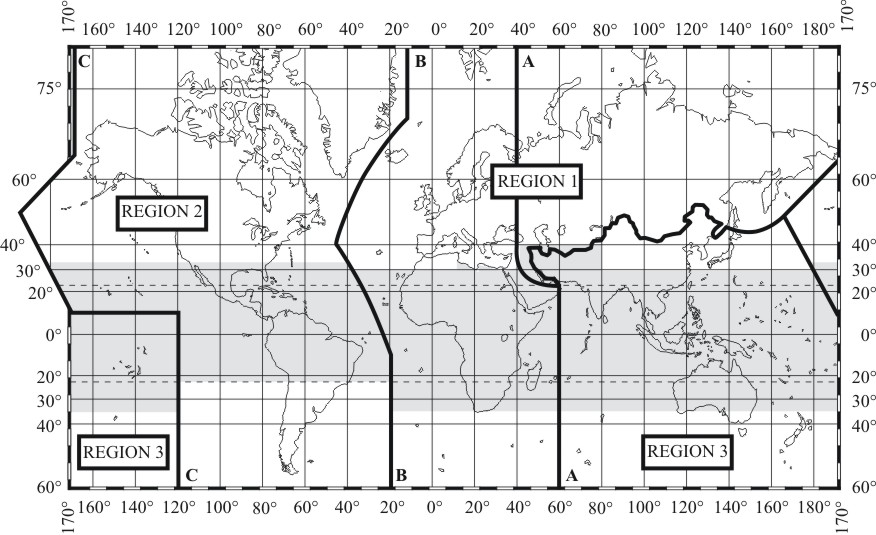
The Telecommunications Authority of Trinidad and Tobago (TATT) has initiated a public consultation on point-to-point radiocommunications systems.  According to the consultation document, the TATT is seeking firstly to identify the various frequency bands of operation deployed globally and, in particular, by International Telecommunications Region 2 countries, taking into consideration the frequency bands and assignment plan presently used by point-to-point systems locally. Secondly, the TATT seeks to analyze and summarize the current spectrum availability for the associated frequency bands in Trinidad and Tobago. Finally, based on the above information, the TATT proposes frequency bands and associated assignment plans for the accommodation of point-to-point radiocommunications systems and indicates the appropriate licensing process for the assignment of spectrum to users.

The specific bands discussed in this consultation documents are 1.4 GHz, 2.4 GHz, 5 GHz, 5.7 GHz, 5.8 GHz, Lower 6 GHz, Upper 6 GHz, 7 GHz, 8 GHz, 10 GHz, 11 GHz, 13 GHz and 15 GHz. As a general rule, the TATT appears to have rejected the idea of a competitive licensing process for this spectrum and is proposing instead to adopt a "first-come, first served" licensing process (with the exception of the 2.4, 5.7 and 5.8 GHz bands, where the TATT is proposing a class licensing regime and the Upper 6 GHz band, which the TATT is proposing to set aside for Studio-to-Transmitter Links). This approach is consistent with international best practice.

While backhaul has traditionally been carried on copper wire or fiber, telecom operators worldwide are increasingly turning to wireless technology for capacity to meet the increased demand created by growing numbers of bandwidth-hungry mobile devices and applications. Wireless backhaul is particularly desirable in the Caribbean, where laying wire or fiber is often cost-prohibitive. Telecommunications regulators around the world are attempting to come to grips with this important component of modern telecommunications infrastructure. The U.S. Federal Communications Commission, for instance, is currently in the midst of a proceeding on this topic.  The TATT is therefore to be congratulated for tackling such an important issue.

Comments are due October 13, 2010

Friday, September 3, 2010

Jamaica Supreme Court Dismisses LIME Application for Injunctive Relief

Jamaica Supreme Court Justice Ingrid Mangatal
Yesterday, Justice Mangatal of the Jamaica Supreme Court dismissed an application by LIME for injunctive relied against Digicel as part of an ongoing court proceeding over fixed-to-mobile termination rates.  Justice Mangatal's decision provides a good overview of the legal test for injunctive relief in Jamaica (and other common law jurisdictions). She concluded that, while there appears to be serious issues to be tried in this proceeding, LIME did not provide sufficient evidence to demonstrate that the balance of convenience justifies injunctive relief.

In the main proceeding, LIME claims that Digicel's conduct in setting higher rates for the termination of fixed line calls from other networks to call Digicel's mobile network, while setting lower rates for calls from Digicel's fixed network to Digicel's mobile network, is an abuse of dominant position under the Fair Competition Act.  LIME also alleges that, under section 30 of the Telecommunications Act, Digicel did not comply with the obligation to provide interconnection on a non-discriminatory basis.  Accordingly, LIME argues that it has a private cause of action under section 48 of the Fair Competition Act and section 67 of the Telecommunications Act.

Interestingly, as part of its defence in the main proceeding, Digicel denied the existence of  "market to terminate calls on Digicel's mobile network".  This position is consistent with Digicel's arguments before the Telecommunications Appeals Tribunal (as previously discussed on this blog).  It is clearly at odds, however, with the conclusions of the Telecommunications Appeals Tribunal, as well as the position taken by the International Telecommunications Union and telecommunications regulators around the world, most of whom have concluded that mobile termination is a distinct market that requires regulation.  In her decision, Justice Mangatal seemed reluctant to delve into such a detailed and complex economic analysis.  It will be interesting to see if the trial judge will rule on this important issue.

Wednesday, August 25, 2010

Mobile Phones and Driving Safety

According to the Guardian, the Trinidad and Tobago Cabinet has endorsed amendments to the motor vehicle legislation to ban the use of mobile devices while driving.  These amendments will soon be tabled in the Trinidad and Tobago Parliament.  In a post-Cabinet news conference on July 29, Works and Transport Minister Jack Warner noted that these amendments are intended to increase road safety in  Trinidad and Tobago.  Both Digicel and TSTT expressed their support for these amendments.
 
These amendments should be a no-brainer for all Caribbean nations.  Several studies have demonstrated clearly  that using a mobile device while driving a motor vehicle entails a similar risk as driving while intoxicated.  A significant number of nations have already adopted and implemented legislation to prohibit this practice.  One can only hope, therefore, that the other Caribbean nations will follow Trinidad and Tobago's lead in the near future.

Thursday, August 19, 2010

Barbados FTC Denies Digicel Motion to Review Consolidated RIO Decision

The Barbados Fair Trading Commission has denied a motion by Digicel for review of a February 2010 decision on Cable & Wireless' Consolidated Reference Interconnection Offer (RIO).  In its submissions, Digicel alleged that the FTC's February 2010 decision was reached in breach of the principles of natural justice and, in particular, that the FTC failed to adequately consult Digicel on certain amendments to the Consolidated RIO requested by Cable & Wireless. 

As part of its motion for review, Digicel submitted that the FTC should communicate to Digicel any changes made, no matter how minor, to the Consolidated RIO.  In its decision, the FTC concluded that this is not required by the Barbados Telecommunications Act.  The FTC also noted that, as part of the proceeding leading up to its February 2010 decision, Digicel had been given ample opportunity to make submissions on the amendments to the Consolidated RIO and therefore that there was no breach of the principles of natural justice.

This decision is a good illustration of the fact that telecom regulators, when adjudicating interconnection disputes, must ensure that all parties are given an opportunity to be heard.  This is particularly true in the Caribbean context, where the telecom industry is becoming increasingly litigious (especially in interconnection matters).